

Min-Jae Kang, Yu-Seong Choi, and Wang-Sang Lee
Applied Computational Electromagnetics Society Journal, Vol.39, No. 5, pp.433-439
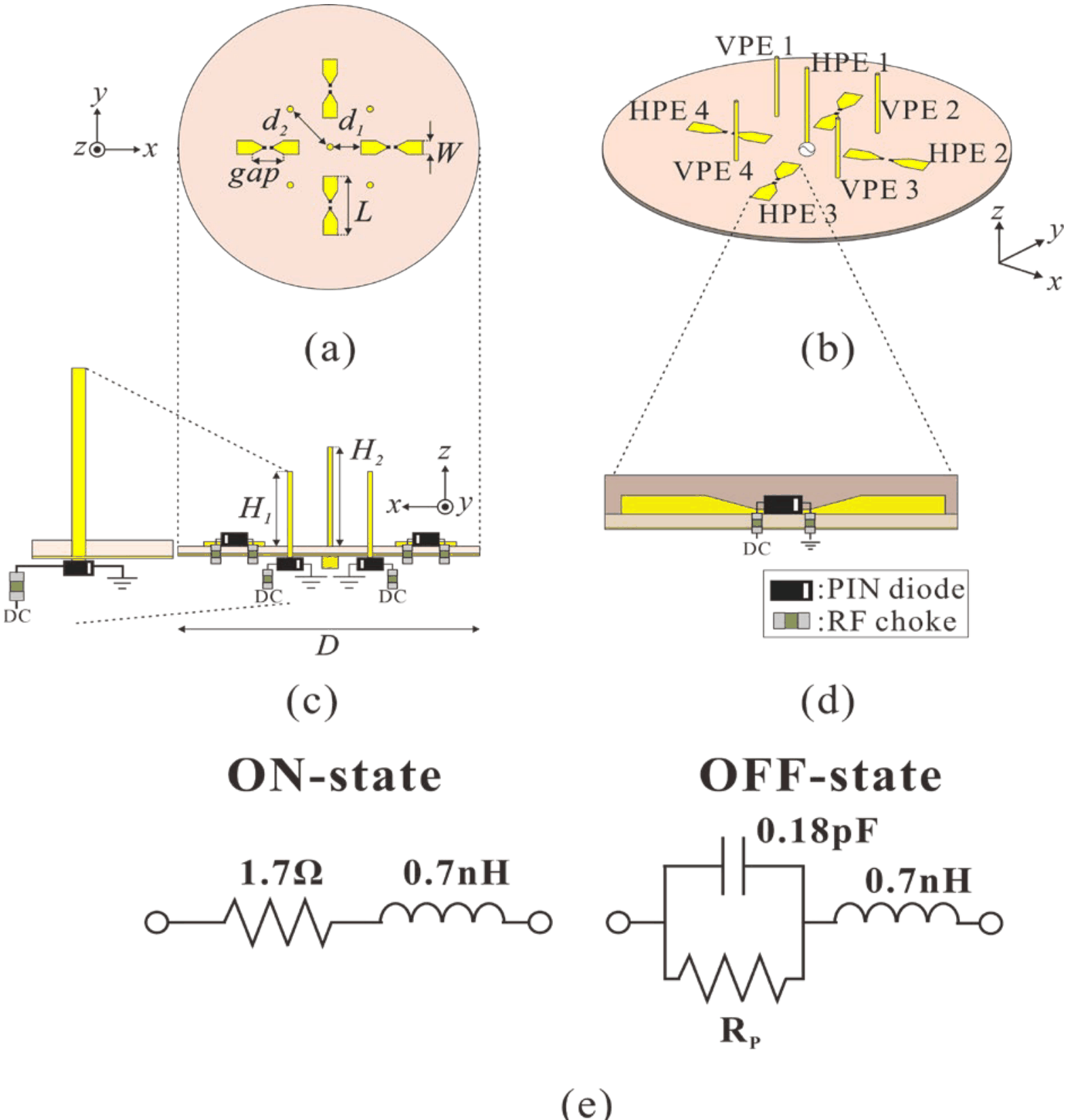
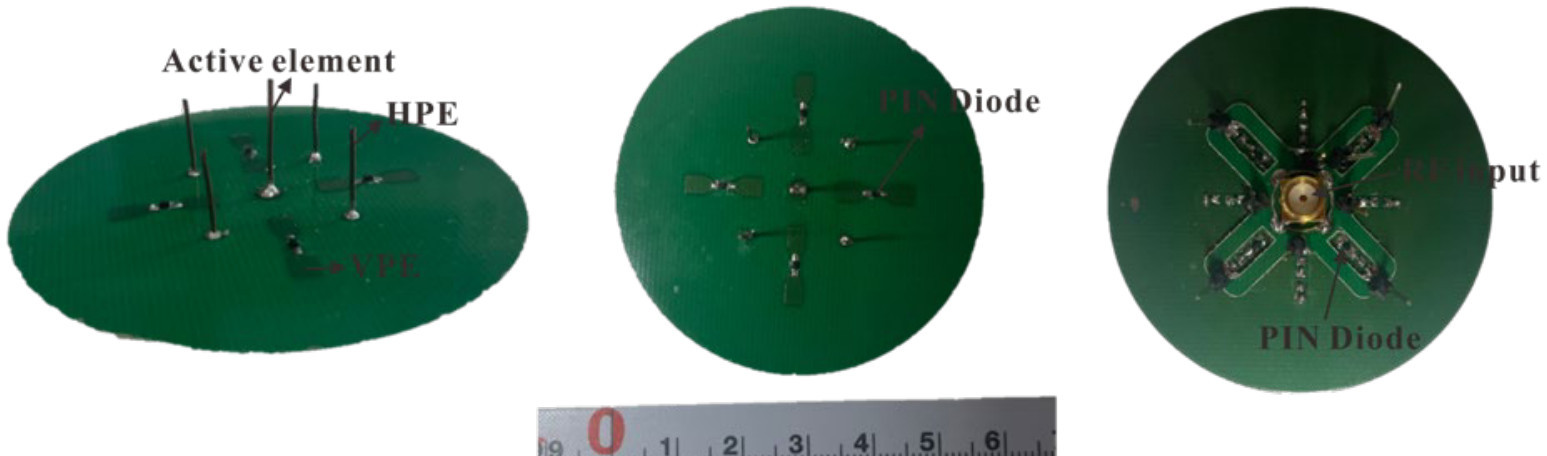
A 9 g ESPAR antenna with a monopole and eight PIN-controlled parasitic elements switches among eight azimuth and four elevation beams at 5.09 GHz for UAVs.
This paper presents a compact lightweight beam-reconfigurable antenna system for unmanned aerial vehicles (UAVs). The antenna system consists of a central active monopole element surrounded by eight parasitic elements, which can be controlled using PIN diodes to switch the beam across four elevation angles and eight azimuth beams. This beam-reconfigurable antenna system has several advantages over traditional UAV antennas, including light weight, efficiency, and compactness. The antenna system operates at 5.09 GHz and achieves a measured peak gain of 4.55 dBi, with a remarkably low weight of 9 g and a size of 1.00λ0×1.00λ0×0.22λ0.
모노폴 하나와 PIN 다이오드로 제어하는 기생소자 여덟 개로 만든 9 g 무인기용 ESPAR 안테나로, 5.09 GHz에서 방위 8개·앙각 4개 빔을 바꾼다.
This paper presents a compact lightweight beam-reconfigurable antenna system for unmanned aerial vehicles (UAVs). The antenna system consists of a central active monopole element surrounded by eight parasitic elements, which can be controlled using PIN diodes to switch the beam across four elevation angles and eight azimuth beams. This beam-reconfigurable antenna system has several advantages over traditional UAV antennas, including light weight, efficiency, and compactness. The antenna system operates at 5.09 GHz and achieves a measured peak gain of 4.55 dBi, with a remarkably low weight of 9 g and a size of 1.00λ0×1.00λ0×0.22λ0.
The abstract is from the published paper (doi:10.13052/2024.aces.j.390507).초록은 출판된 논문(doi:10.13052/2024.aces.j.390507)에서 옮겼습니다.